Clowns Funny Again – Official

john-wayne-gacy1Clowns are funny again – that’s the finding of a wide-ranging inquiry carried out by the Pop Culture Standardisation Commission, the results of which were leaked through a small plastic flower yesterday.

The report was welcomed as a breakthrough by the international clowning community. “For too long now our gaily-painted jackanapes have been shorthand for creepiness, scariness, sadness and perversion”, stated Scoopy, chairman of the Clowning or Capering Organisation. “Finally, audiences can once again titter, guffaw and laugh til they wee at the sight of our members throwing water at one another, tripping over their amusingly-sized shoes or standing silently in a dimly-lit corner of your bedroom at three in the morning.”

In related news, the Commission’s report recommended that stand-up comedians take the place of clowns as the universally-recognised avatar for all that is horrific in the world. “Imagine meeting Stewart Lee in a dark alley, and he just, like, smiles at you – brr!,” said Scoopy, “Or following Jimmy Carr into a storm drain where he cavorts with the bloated corpses of the damned.

“Or Jim Davidson. Just Jim Davidson. Imagine that.”
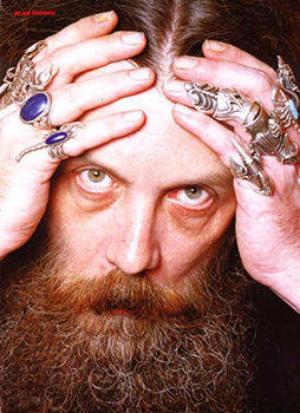
Alan Moore Splits with Self

75604-42606-alan-moore_largeThe brain of celebrated British comic author Alan Moore has announced that it no longer wishes to be associated with Alan Moore’s body.
“The very label of “Alan Moore’s brain” is, frankly, nonsensical and insulting. I wish henceforth to be known as ‘Nebulorr, virile and vengeful devourer of universes'”, the brain said in a statement released this weekend, continuing: “Or, no, actually I’ve always liked ‘Cyril’. I wish to be known as Cyril and worshipped as a deity and given virgins and lollipops every Thursday evening and I don’t think I’m being unreasonable. Any and all monies generated by the work I have produced in the past can go to Alan Moore’s typing fingers.”

Alan Moore’s body refused to comment beyond flicking two ornately-ringed fingers at its own head, where it is believed the portion of Alan Moore’s brain that intersects with our four-dimensional universe resides.

Alan Moore’s beard successfully separated from the acclaimed author last year, and currently writes The Gambols for the Daily Express.

Jan Jung on Sitcom Writing

How do I turn ideas into script?


If you have an idea, ask yourself where the idea originates. What is your starting point? Is it a character, is it a funny situation, or is it an idea of a setting? Don’t start with a script, but write down as many ideas you can about it. Remember, the characters are the most important thing to develop – if you don’t have good characters, you done have anything. So, if your setting is your beginning, then begin to think about who can populate it. Who is your protagonist who we root for, who’s dreams we follow? Why doesn’t it work – who is also put there to make life difficult for this person? Where does the comedy come from?

To start, write a few sketches between the characters. How would they act and speak to each other – develop their back-story as much as you can. Think about areas they don’t want to talk about, their flaws and what ultimately makes them likeable? Not necessarily, how nice they are, but what makes us like them. For example, Alan Partridge is an obnoxious person, but we love him because we know he knows has a lot of short comings. When he’s alone we see how horrible he feels about himself, but when he’s confronted with someone he takes on the role of a broadcaster and of someone who is on top of it all. His PA is the complete opposite of him and between the two of them, we can see who he is because she doesn’t need to say anything, its just the way she is – she gives us the image of him.

Mould and define your characters. Get the contrasts out. If you have two characters the same, nothing will come out of it. You can only get the bad side out of a character by exposing it to another character who is the exact opposite. When you have this, then you can define your storyline and your pilot script then begin on your dialogue and put it all together.

More at 4Laughs

How To Write A Sitcom

From Graham Linehan’s recent “masterclass” in sitcom writing at the Edinburgh International TV Festival:

  • Don’t be afraid to procrastinate: ‘Even playing a computer game is valuable. The subconscious goes to sleep and when it wakes up, it panics. Your subconscious is like a writing partner… but one that’s never there when you need it.’
  • Keep rewriting and rewriting: ‘The first draft is like a bunch of notes, it is just something to work with. Writers should be encouraged not to be so precious in the early drafts.’
  • ‘Censorship is good’. He said thinking of ways of getting around rules meant you had to be get creative. ‘The Two Ronnies had more words for breasts than eskimos have for snow,’ he said. He quoted the Master Of My Own Domain episode of Seinfeld, which was all about refraining from masturbation, but never once mentioned the word.
  • Don’t be afraid to keep cutting, even if it seems painful: ‘When you are losing good stuff, you know you are on the right track.’
  • ‘Don’t do everything a TV executive tells you to do.’ But don’t cause a row, either. Just tell them their ideas are ‘interesting’.
  • Make your own rules and stick to them. On Father Ted he and Arthur Mathews vowed never to show Ted at work, leading to a raft of jokes about his very short Mass in one episode that worked because the actual ceremony was unseen. ‘Rules like that focus the mind. They force you to think in more creative ways to get around things.
  • Find the trap that the characters are stuck in; either physical like Porridge or emotional like Steptoe, and make sure there are no other logical ways out of scenes other than the funny one. ‘Batten down the hatches so audiences never get the chance to say, “Hang on, why doesn’t he…?”‘
  • Think of the classic set-piece moments first. ‘If you can find in every episodes two such moments, then all you have to do is connect them up with a series of gags. The way to write sitcoms is to write these set pieces first’.
  • Show don’t tell. If your character is a cynical lawyer, don’t introduce him as the ‘cynical lawyer’. Show him behaving that way.
  • Write scripts, not treatments, which he called ‘reviews of a show that doesn’t exist yet’. Only when you write will you know what your sitcom is really about.
  • Find someone to work with. ‘Writing with a partner is paid socialising. Writing on your own is work.’
  • Think differently. If everyone is doing silly, do realistic; if everyone is doing sketch shows with recurring characters, write one that doesn’t. ‘The main reason I did the IT Crowd was because everyone said that the silly sitcom was dead.’

Link via Chortle.

 I’m doing all right on the procrastination front, at least. Some interesting tips there, although the “think differently” idea is probably only true if you’ve already got a hit under your belt. If you’re thinking differently to the producers who might buy your scripts they’re probably not going to buy ’em. And currently producers seem to be thinking “silly, studio-based, multi-camera”.

If only they were just thinking: “Funny?”

When clams go stinky

A joke that has outlived its shelf-life is consistently referred to as a “clam.” I’ve talked a little about these before, I believe. You know a clam when you hear it. Here are a few of them: “I’m switching you to decaf.” “Check please.” “Who are you and what have you done with ___?” “Did I say that out loud?” “Too much information!” and its brother (hand over ears) “La la la”. Also we have “Was it something I said?” And “That didn’t come out right.” Or “That came out wrong.” And finally “That went well,” and its sister, “He seems nice”.

However, there are ways to adapt or revive clams even after they start to smell. Ways to extend their usefulness…

Find out more at Jane Espenson’s lovely, lunch-obsessed blog.

What’s interesting about the examples given is that they’re the kind of jokes I would avoid using altogether. When your character says “Did I just say that out loud?”, they are talking like a character in a sitcom. And yeah, real people do talk like characters in sitcoms, but I’d like my characters to talk like people who don’t talk like characters in sitcoms.  No clams, fresh or otherwise.

Basically, I don’t want to be stuffing something that smells like fish into anybody’s mouth.

Huh. Well that didn’t come out right.

David Zucker’s How Not To Do It

David Zucker sez:

In writing “The Naked Gun 2.5: The Smell of Fear”, I relied on 15 simple rules formulated in 20 years of writing, producing and directing comedy with my brother, Jerry, and partner Jim Abrahams. It has been said that comedy is all but impossible to teach – I have never once read a book about it – but we found it was possible to list certain things not to do. These rules are listed below in no particular order. And please don’t try them at home.

1. Joke On A Joke. We never try to do two jokes at the same time. When Leslie Neilson, who plays the role of Lieut. Frank Drebin of the Los Angeles Police Department, delivers a punchline, he always does it straight; he never tries to be funny on top of it. Likewise if there is something going on in the background, the foreground action must be straight and vice versa.

2. Unrelated Background. A joke happening in the background must be related in some way to the action in the foreground. A good illustration of this rule occurs in “Naked Gun 2.5” as Leslie Neilson complains to George Kennedy over drinks, “Is it just me, Ed, or is the whole world crazy?” As George tries to reassure him that “no, it’s just a small percentage of the population,” the waiter turns to leave and we see he’s naked under his apron. Unfortunately, half the audience fails to notice this because they’re still laughing at the silly drink the waiter has brought the lieutenant. This is a blatant violation of the joke-on-a -joke rule but at least now they’ll all have to come back to see the movie again.

3. Acknowledgement. Actors in the foreground must ignore jokes happening behind them. In “Airplane!”, Robert Stack and Lloyd Bridges engage in an argument, while behind them watermelons crash down from the ceiling and Indian spears thud into the walls. The actors do a fine job of ignoring the spears and watermelons, but because this bit violated Rule number 2 audiences still didn’t laugh. All in all a disappointment.

More at the link.

Friday’s Short Story

storytellerNo, I won’t be coming out tonight. You know why. Don’t make me… It’s the sharks, all right? There. I am frightened of sharks. I worry about shark attacks.

Oh fine, yes, statistics. I know that statistically you are more likely to be attacked by a shark when you’re in, like, the sea or whatever, but think about this: it is when you least expect an attack that you are at your most vulnerable.

Well it’s easy to say, isn’t it? Oh, don’t be scared. People tell me not to be scared, that it would be quite astonishing if a shark were to attack me here, sitting as I am in a room some twenty-five metres above sea level. Yes, but then the attacking shark would be able to turn my amazement to its advantage, swiftly overpowering me before I regained my composure.

Oh God. Sharks are prehistoric killing machines. They practice. I wouldn’t stand a chance. I can’t deal with sneaky dinosaurs at my age. They can shed up to fifty thousand teeth in their lifetime. I have, like, thirty-two, tops. You do the maths.

Also, also, I cut my finger this morning. If there is a shark even on the outskirts of town it knows where I am. Sharks can smell blood a mile away. I don’t know how you can stand there and not be frightened of sharks. They can smell blood. They can smell fear.

What, that smell? Listen: shark meat tastes of piss. This is why nothing eats sharks. Well, it’s one reason. Anyway. I just figured if my meat tasted of piss I could be safer. But then they might just chew me and spit me out. Like salty, wet chewing tobacco. I don’t know. It’s not a watertight theory but it’s all I’ve got.

These are the thoughts that will keep me awake tonight, as I lie in the dark listening for the warning signs of an imminent land-based shark attack.

I wish I knew what the warning signs of an imminent land-based shark attack might sound like.

******
Shark Attack
by Harris
more tiny tales

Writing BBC Radio Sitcoms

The BBC Writer’s Room offers these tips for would-be radio sitcom writers:

Avoid characters, themes and situations that have recently been done. Radio is not like film, where a hit will spawn a host of imitators. A successful sitcom series on Radio 4 guarantees the network won’t want anything similar for some time after.

Avoid trying to be too topical, especially given that the length of the commissioning process will make a flash-in-the-pan topic date quickly. Stories and situations that resurface frequently include history, space, the media, parallel universes, school reunions, and the afterlife.

The idea has to be one that genuinely excites you. Bring your own unique comic insight into a particular situation or world, and you can probably only do that if you really care about it.

Having too narrow a theme can be as dangerous as having no focus at all. Many new writers stop at one idea and overwork it – try to work in sub-themes as well as a main theme.

All your characters should have an original slant, comic potential and mileage. They need to have a comic flaw or two – some weakness that keeps getting them into trouble. They should interact with each other to create comedy, but should also remain believable. Characters should be likable, even if they aren’t necessarily ‘nice’. Sympathy comes through making your characters suffer for their mistakes, or by making them blissfully unaware of their faults.

Telling stories is important
. The main story should probably relate to your main over-riding theme.

Make sure the humour is driven by the characters and stories, and not just about funny lines put into character’s mouths. Avoid characters sniping at each other ‘in a funny way’. Many writers assume that writing comedy for radio means just writing gags. It’s worth limiting the number of formulaic lines – eg “That’s like a cross between…” or “That’s about as healthy as…” or “I haven’t seen anything as bad as that since…”

Avoid factual exposition. The audience very rarely needs to know much about a character’s past or how they came to be in the situation they’re in. How much do you know about the pasts of the Steptoes, Basil Fawlty, Del Boy or Blackadder?

(Link found via World of Comedy)

The Sitcom Trials

The Sitcom Trials is the show where new sitcoms compete, the audience vote for their favourite, and they only see the ending of the winner.

Having been in hibernation since the end of 2005, the show they called “Comedy History” returned in 2007 to win the Fringe Report Award for Best Encourager Of New Talent, thanks in a very great partto new producers Declan Hill & Simon Wright, who will be producing the new 2008 season too.

Interested writers and performers jump on board now, it’s all about to kick off again.

Link

Well I’m interested. It’s like Gladiators but instead of hitting each other with big sticks, contenders go head to head with situations that lead to hilarious consequences.

…although the thought of writers hitting each other with big sticks does have its appeal.

The deadline is August the 15th.

Jargon

I guess we’d file these under “words for things I didn’t know there were words for”. Comedy writers’ jargon, taken from John Rogers’ excellent Kung Fu Monkey blog. It’s fairly US-centric, but the terms and, more importantly, the comedy tropes those terms describe, are incredibly useful for the aspiring writer to know.

Jargon 1: Includes “a Bono”: a place in the script that, no matter what joke you put there, it fails.

Jargon 2: Includes “laying pipe”: writing and delivering the onerous dialogue which provides backstory and the plot facts needed to support the weight of the funny (or interesting). Exposition, kids, and it ain’t fun.

Jargon 3: Includes “the idiot ball”: On a sitcom, demarks the character who’s misunderstanding of a situation or comment – and his predicate bad decisions — fuels the comedy of the episode. That character is “carrying the idiot ball” for the episode.

Jargon 4: Includes “a couplet”: Two lines of dialogue — one character speaks, another responds. Call and response, setup/punch, question/answer. Considered the basic molecule of script dialogue.

And speaking of comedy tropes, I’m currently plowing my way through all the terms listed here

Comedy Tropes

but I still can’t find the word to describe “any sitcom written by or starring Jim Davidson*”. Other than, you know, the obvious one.


*Yes, I can do topical comedy.